You do not need another identity to perform.
You may already know how to achieve, take responsibility and make things happen. The question is whether those strengths have become the only ways you know how to respond.
The work is not to discard your capability. It is to make more of you available: to lead and listen, to act and reconsider, to care without having to control.
More available to you – not more required of you.
The Three Fields™
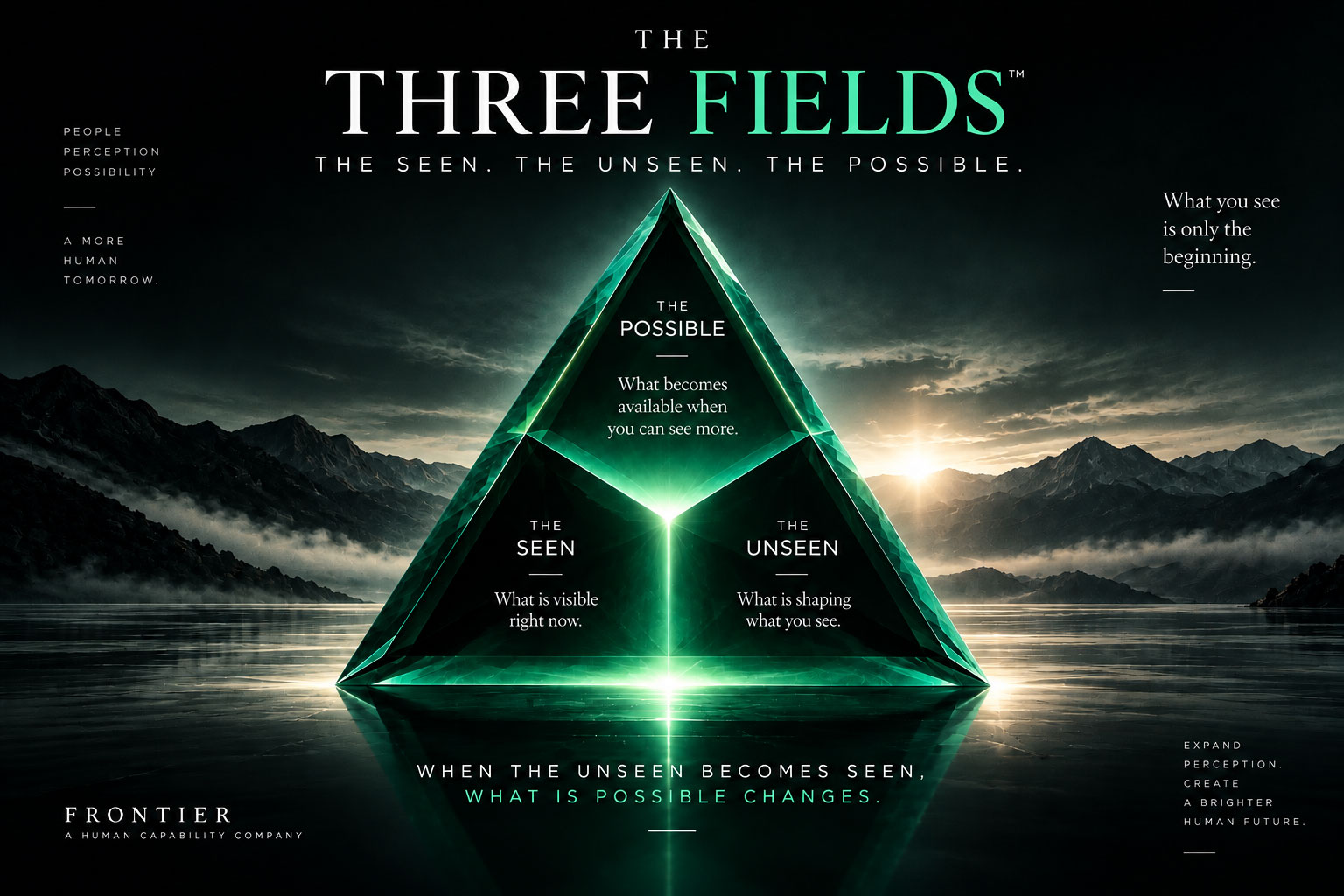
What becomes available when you can see more.
A wider view can reveal different choices, better questions and new ways to respond. Those possibilities become useful through action.
Gather independent views before stating a preference, invite specific concerns and test whether different conditions bring useful information into the discussion.
What is visible right now.
Behaviour, conversations, decisions, results and observable events. Begin with what can be observed before deciding what it means.
The executive team raises no objections to a proposal.
What is shaping what you see.
Identity, assumptions, emotion, incentives, relationships, authority, systems and patterns may influence the situation. Investigate these through evidence, context and conversation.
They may agree. They may need time to think. The leader’s stated preference or previous reactions to disagreement may also influence what is said. These are possibilities to check.
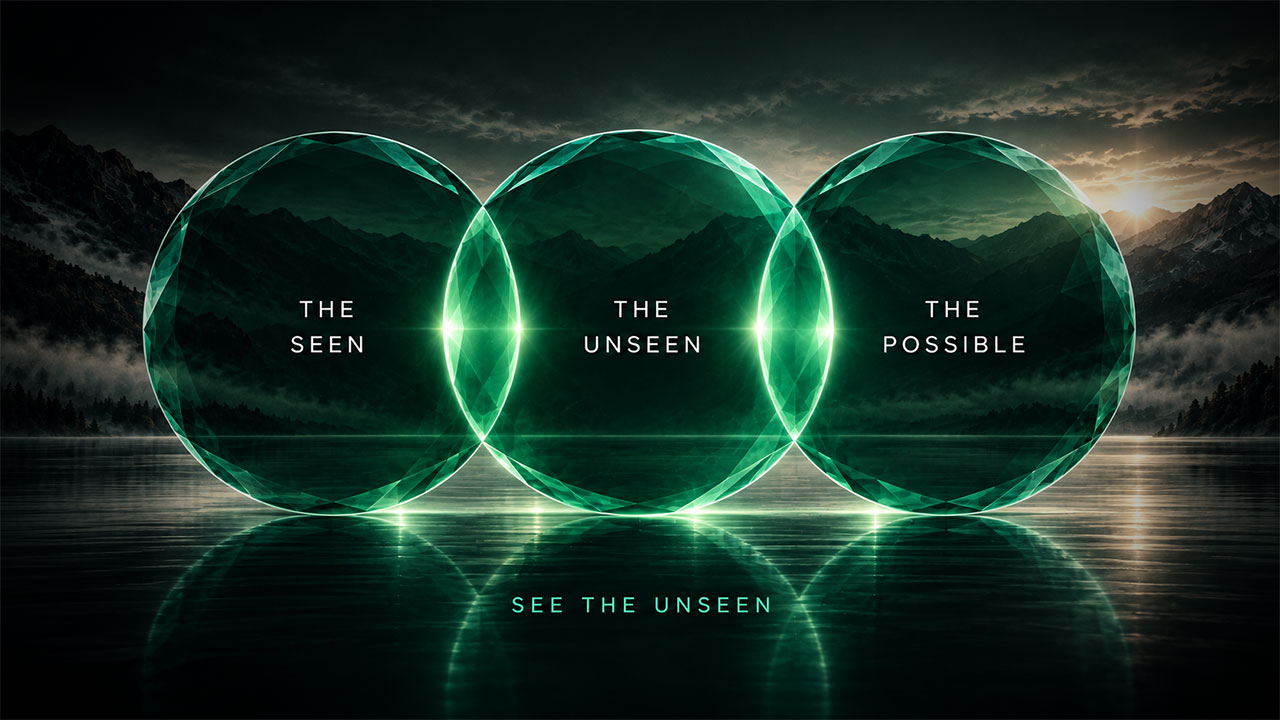
The seen. The unseen. The possible.
- The Seen
What is visible right now.
- The Unseen
What is shaping what you see.
- The Possible
What becomes available when you can see more.
When the unseen becomes seen,
what is possible changes.
What you can see is not the whole situation. What you cannot yet see may be shaping it. When more becomes visible, more becomes possible.
The Three Fields describes three coexisting aspects of a human situation. The practice is to distinguish observation from interpretation, investigate what may be shaping the situation and explore the choices a wider view makes available.
Use the diagram, the three exact definitions and signature line from page 2. Retain the existing “One response. More than one explanation.” illustration immediately after this section. It already demonstrates the discipline behind the model.
AN ILLUSTRATION, NOT A CLIENT CASE
One response. More than one explanation.
Imagine a colleague goes quiet after you challenge an idea. You could read that silence as agreement, resistance or lack of confidence.
But you do not yet know. They may be thinking. They may be unconvinced. They may be deciding whether disagreement is safe.
Start with what you observed. Distinguish it from what you inferred. Ask what else could explain it. Then test your interpretation through an appropriate conversation.
Your presence changes the people you’re trying to read.
From seeing to creating.
Expanded perception creates room for choice. What you choose still needs direction: your values, relationships, responsibilities and the consequences you are willing to own.
01 /
Perception
Detect more of what is present.
02 /
Awareness
Recognise what you are noticing – in yourself, other people and the situation.
03 /
Choice
See options that your first interpretation left out.
04 /
Agency
Choose consciously within the constraints that are real.
05 /
Authorship
Bring your choices into the life you are creating through repeated action, guided by your values and responsibilities
The Observer is not the destination.
You notice the pattern so you can return to the conversation differently. Not to stand outside your life analysing it forever.
The aim is fuller participation – in work, love, family, decisions and contribution. You still care. You still act. Your first reaction simply has less exclusive control.
Unlearning without losing what you have earned.
You can remain capable without carrying everything. Knowledgeable without needing to be certain. Ambitious without making every outcome a verdict on your worth.
Some change comes through learning. Some comes through recognising that an old rule no longer needs to decide what you are allowed to do.
What comes together in this work
Frontier brings together human behaviour and influence, perceptual awareness, and spiritual inquiry into identity, meaning and connection.
The study of human behaviour and influence examines how our actions, communication and relationships affect what happens between people.
Perceptual awareness examines how assumptions, experience and our own presence shape what we notice and what we miss.
Spiritual inquiry explores who we are beneath familiar roles, what gives life meaning and how we relate to others and the world. You do not need to adopt a particular belief system to explore these questions.
The Three Fields gives this work a practical organising model. All three areas inform how we explore the Seen, the Unseen and the Possible. Intuition can open a question; interpretation still needs to be examined against experience, evidence and other perspectives.