ORGANISATIONS / LEADERSHIP / HUMAN CONTRIBUTION
HUMAN VALUE
What becomes possible because you are there?
PERFORMANCE IS NOT THE WHOLE PICTURE.
The result is visible. The conditions often are not.
A concern is softened before it reaches the executive team. A capable person stops contributing an idea. A team becomes dependent on its leader. A conversation ends in agreement without producing commitment.
These situations deserve more than a judgement about motivation. They deserve an examination of the expectations, incentives and interactions producing them.
The question is not only who needs to perform better. It is what the organisation is making easier or harder to see, say and do.
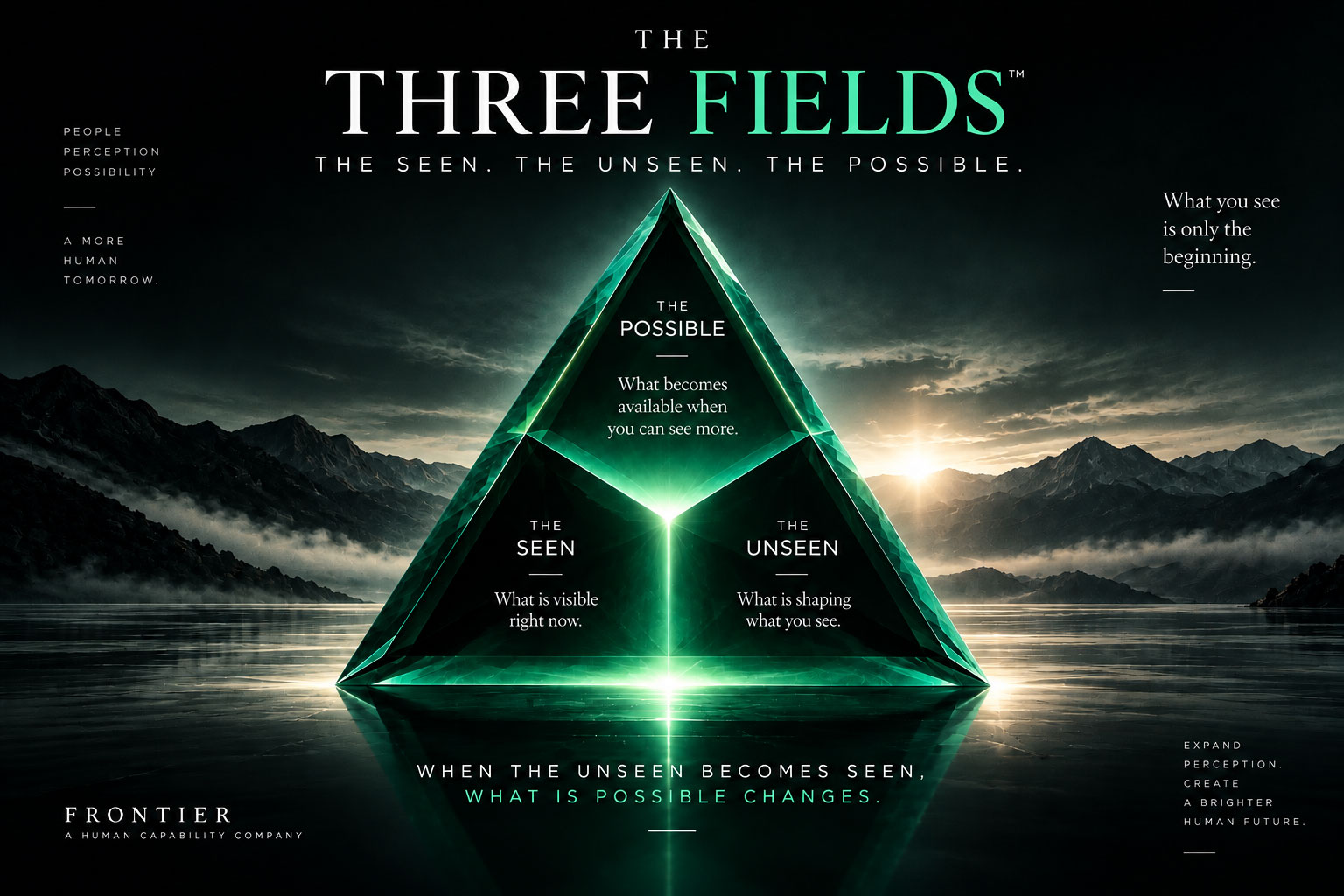
What becomes available when you can see more.
A wider view can reveal different choices, better questions and new ways to respond. Those possibilities become useful through action.
Gather independent views before stating a preference, invite specific concerns and test whether different conditions bring useful information into the discussion.
What is visible right now.
Behaviour, conversations, decisions, results and observable events. Begin with what can be observed before deciding what it means.
The executive team raises no objections to a proposal.
What is shaping what you see.
Identity, assumptions, emotion, incentives, relationships, authority, systems and patterns may influence the situation. Investigate these through evidence, context and conversation.
They may agree. They may need time to think. The leader’s stated preference or previous reactions to disagreement may also influence what is said. These are possibilities to check.
The seen. The unseen. The possible.
- The Seen
What is visible right now.
- The Unseen
What is shaping what you see.
- The Possible
What becomes available when you can see more.
When the unseen becomes seen,
what is possible changes.
The work begins with what is happening.
01
Leadership and authority
Examine how status and everyday behaviour affect information, decisions and responsibility.
02
Team capability
Explore the interactions that strengthen or constrain independent thinking, trust and contribution.
03
Executive advisory
Work with the people making consequential decisions, without assuming their first account contains the whole picture.
04
Human value
Examine contribution that output measures alone may not describe.
An ally to the people carrying the responsibility.
This work sits alongside leaders, HR and teams. It is not an argument that one profession has failed or that every organisational difficulty is an individual’s mindset.
Sometimes the useful change is in behaviour. Sometimes it is in incentives, workload, permission, role design or the way decisions are made.
Developing human capability should make those distinctions clearer.
Start with context. Define the work. Review what changes.
First, clarify the situation, who is affected and what a useful outcome would look like. Then agree the scope, delivery, evidence and investment.
The engagement is shaped around that context. We do not begin by prescribing an organisation-wide programme or a score for everyone.
Review the outcomes and the surrounding conditions. A positive change is valuable; it should not automatically be attributed to one intervention.
Contribution is larger than output.
Output measures show part of a person’s contribution. They may miss the risk someone noticed, the honesty they made possible or the capability they developed in another person. The Three Fields helps us examine what is visible, what may be overlooked and what could become possible when contribution is understood more fully.